How to View Abstract Art (When You Just Don't "Get It")
Updated: Apr 10
When you meet a new person In the DC area, the customary way to start a conversation is "so, what do you do?" Here is the template for 92% of the ones I have: "So, what do you do?" "I'm a painter." "Ooh, what kind of paintings do you do?" "Abstract." "Woah, wow. You know, I've tried but I just don't get abstract art." If you've said the same thing, you're not alone. So many people find abstract art confusing, random, or indecipherable without a Master's degree. But the truth is, enjoying abstract art is so much simpler than you think.
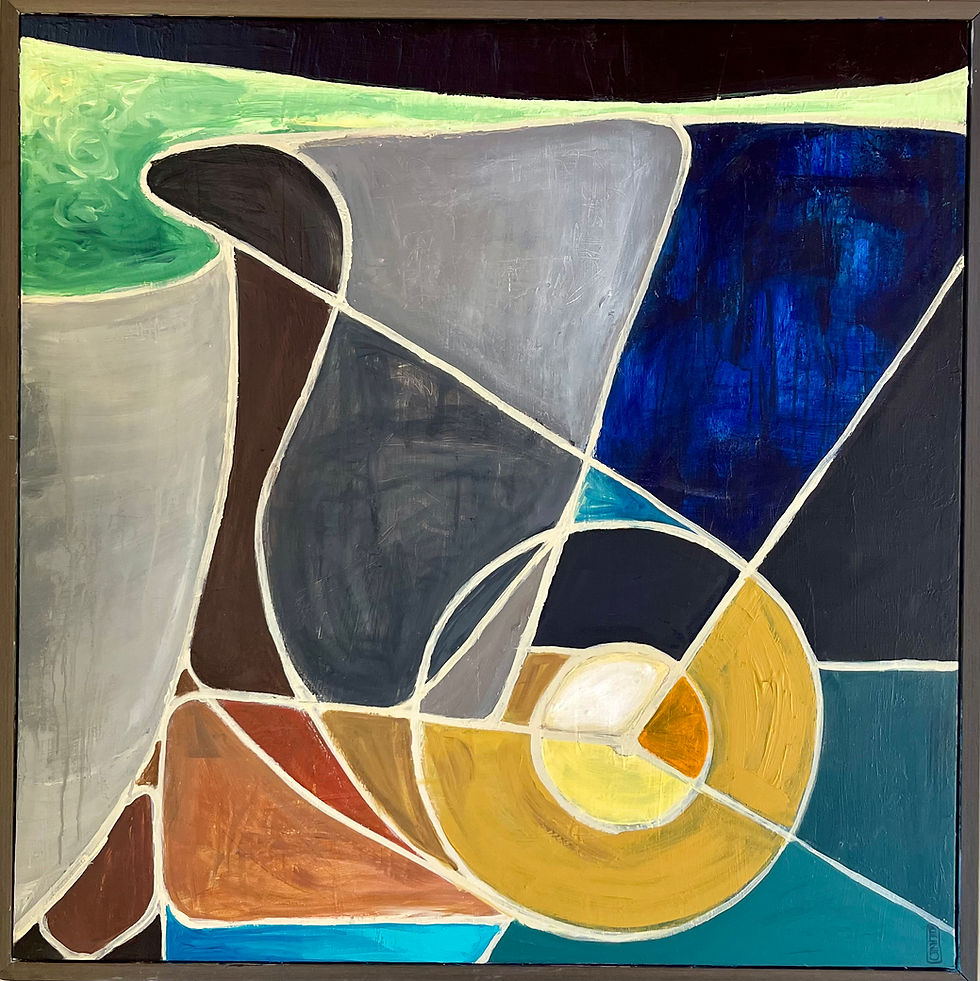
Before you took your preschool art class, you had favorite colors. You loved picture books long before you could read the words. You enjoy (and sometimes might be awed by) the beauty of sunsets, moonlight, and the curves of your lover’s body without needing any explanations. Abstract art communicates in a way very similar to those experiences. The artworks invite you to view colors, shapes, lines, and sometimes words in a new context - and with very different parts of your mind than the representational "bowl of fruit" genre.

You Already Understand It...I Promise!
Think back to childhood. You didn’t need to analyze a picture book to enjoy it. The colors, shapes, and story rhythm spoke to you on a direct and primal level. Abstract art works similarly - it doesn’t rely on clear images or realistic scenes. Instead, it uses color, form, rhythm, light, shadow, and texture to express ideas and feelings. They speak to you on the same direct, instinctual level that your storybooks did.
For example, when you see a sunset, you don’t focus on every detail or think about how you're supposed to "understand" it. You just view the warm, melting colors and enjoy the calm of the fading light. You savor how watching it slows your heartbeat and smooths out your nerves. It reminds you of last time you were at the beach, with that one guy. Abstract paintings ask you to look them in the same way - what's it stirring up in you? Are the lines smooth and relaxing or jagged and energetic? Do the colors remind you of something? Try to pay attention to what the image does to your senses, not what it "represents", or even what it "means".
This is the One Secret. This is the key. You don’t need to “understand” abstract art like a puzzle. You can enjoy it by noticing what draws your eye, what colors make you feel calm or excited, what memories of yours are stirred up, and what shapes remind you of something familiar. One of my favorite things to do (when I'm not painting) is stumble around modern art galleries with my husband like a drunken toddler whispering "oooooh, aaaaah, woah come look at this one! It's the world's angriest spatula!" That is the level of sophistication I'm advocating here.
Practical Tips for Enjoying Abstract Art
Here are a few things you can try next time you're at a gallery, or clicking around my website:
Look slowly and with an open mind. Don’t rush to find meaning. Let your eyes wander over the painting and notice what stands out. Squint your eyes. Turn away from it, and turn back really quickly. What do you see first?
Focus on color and shape. Ask yourself which colors you like and why. Is that the color of blue from your uncle's terrible Chevy? Do the shapes feel sharp, soft, chaotic, or calm? Is it light or dark? Does it make your eye want to move a certain way over the canvas?
Connect to your own memories or feelings. Does the painting remind you of a place, a mood, or a moment in your life? Does that milky orange remind you of that wrap-square cheese your dad used to put on sandwiches?
Talk about what you see. Share your thoughts with friends or write them down. Art viewing becomes so much richer this way. Even just a few words that come to mind, song lyrics, or sentence fragments will work.
Remember there is no right or wrong. All art is a conversation between the artist, the image, and the viewer. Your response is meant to be personal and unique, even if it differs from others. There's not going to be a quiz, nor any test you have to pass. The docent is not going to stop you on the way out the door and tell you not to come back. (Or if they do, you probably shouldn't have cracked your beer open so loudly.)
Why Abstract Art Can Feel Intimidating
One reason abstract art can be hard to enjoy is that it's challenging and often looks very different from traditional art. We’re used to portraits, landscapes, and clear representations in older paintings. Abstract art breaks many of the traditional rules. It can seem like the artist just splashed paint randomly (and sometimes they did!) Be honest: how many of you have had the "my 4-year-old could paint that" thought?
Another challenge is that art viewing often happens in quiet, formal spaces like galleries or museums. The fancy setting often makes people feel self-conscious or somehow "under-qualified". Remember: your perception of the image is what matters most to the artist. I've been painting for more than 30 years, and I have still not met another artist who does not LOVE hearing what their work inspires in others. If I do, I will know they are a schmuck.

Another factor in the confusion around abstract art is the history and industry surrounding it. Art dealers and historians love to categorize and give names to artwork: is it "post-expressionist" or "Dada"? Is it from the "Fluxus" movement or the New York School? Does it have "sgraffito" in it? While many people enjoy learning about these things, the words are alienating for everyone outside the industry and create an air of exclusion. Even as an artist, I find these terms to be silly, restrictive, and off-putting (don't invite me to any of your fancy cocktail parties, I will not keep up with the conversation.)
Story Time! Meet My Mom.
Listen: there could not possibly be a less art-inclined person out there in this world. My mom's almost 80 and worked for more than 50 of those years in an operating room. Medicine? Genius. Science: a natural. Logical and executive thinking, forethought, organizational skills, planning? Ninja-level. Any kind of art whatsoever? "Nonsense." Absolutely NOT. Since my childhood, she has nodded and smiled lovingly when I show her my artwork, as any mother would. When I made the switch from traditional/representational painting to abstract painting? "Oh, Lord, now, that's just way over my head. Not for me. I don't get that at all."
I made her sit down next to me (because I am bossy) in front of a recently completed painting. I gave her the talk I just gave you, above, and the tips. I explained that it doesn't "mean" anything, that there's nothing for her to get...just colors, lines, shapes on a piece of canvas. I asked her to just look at it for a minute - nothing else, no thinking, just look.

Once she let her eyes look at it alone (no thinking, no "supposed to", no "what does it mean", she began to enjoy it. "I really like whatever kind of crayon or whatever you used to make those orange lines!" "Ooh, I see a little guy in a boat! It's dawn and he's just kind of floating there!" Looking at this abstract collection of textures, lines, and colors, the most left-brained of left-brained people in the world smiled and said "I really like that little guy!" When I made it, I was not thinking about a little guy - I still don't even see what she's talking about. But I got to watch her really look at it and soak it in, I got to watch her enjoy a piece of abstract art for the first time in her life. This is my favorite part of being an artist, by a long shot.
Sometimes, she looks at my paintings with a squinty face and says "nothing. I got nothing." That's okay too!
"Be Not Afraid" as the feller says! The piece of abstract art in front of you was literally made for you to see. Trust your own eyes, feelings, intuitions, and memories as you look at it - just like you did when you were a kid. You don't need to "get" it - you just need to let it speak to you. Enjoy it! Or not, that's cool too.
~Kristine


Comments